Home › AI › Build Your First AI Agent in 2026 (Step-by-Step Beginner Guide)
Build Your First AI Agent in 2026 (Step-by-Step Beginner Guide)
Let’s be honest. It’s 2026, and the novelty of writing prompts has worn off. We’ve all spent hours fine-tuning the perfect sequence of words to get ChatGPT or Claude to output a simple table or a specific email draft. While prompt engineering was the breakout skill of 2023, today it’s increasingly seen as manual labor.
The real leaders of 2026 aren’t the people writing the best prompts. They are the people engineering the best workflows.
Recommended for you
This AI Tool Creates Videos in 30 Seconds (No Editing Needed)
10 Best Free AI Tools That Save You 10+ Hours Daily (2026 Guide)
If you are still manually copying data from an email, pasting it into a large language model (LLM) to summarize, and then manually pasting that summary into a Slack channel, you are stuck in the past. You are leaving hours of productivity on the table.
Welcome to the era of Agentic AI. It’s time to move from prompting to delegating.
The Atomic Answer: What is Agentic AI?
Agentic AI refers to autonomous AI systems—often called "agents"—that can reason, plan, and execute multi-step workflows without constant human supervision. Unlike standard LLMs, which only generate output in response to a direct prompt, Agentic AI can make decisions, use external software tools, and work continuously until a goal is achieved.
The Strategic Leap: Why Organizations Must Embrace Agentic AI
We are no longer just asking AI "what is this?" or "write this." We are now telling AI, "Here is the goal. Go figure out how to achieve it."
This shift from a passive assistant to an active operator changes how organizations view efficiency. Incorporating Agentic workflows provides several massive competitive advantages:
1. True End-to-End Automation
Standard automation (like simple trigger-and-action Zaps) requires rigid inputs. If the input changes slightly, the workflow breaks. An AI Agent, however, uses its language model to navigate nuance. If it encounters an unexpected data format or a simple error, it doesn't stop and alert a human. It can reason through the error, adjust its plan, and keep going.
2. Reduced "Time-to-Execution"
An organization’s speed is defined by its bottlenecks. Bottlenecks almost always occur at the "human-in-the-loop" stages where manual decision-making is required. By delegating routine decision-making to agents (e.g., "classify this invoice," "triage this customer support ticket," "schedule this meeting"), organizations radically compress their execution cycles.
3. Scalability Without Overhead
The standard model of business growth requires hiring more staff to manage increased operations. In 2026, scaling is defined by Agentic Capacity. When customer demand spikes, you don't need to hire and train temporary workers; you simply deploy more agents. An agent costs pennies to operate, works 24/7, and never burns out.
4. Cognitive Resource Allocation
This is the single greatest benefit. By offloading thousands of small, repetitive decisions to AI Agents, an organization frees up its human team to focus exclusively on strategic, creative, or high-empathy work. You are no longer paying humans to be processors; you are paying them to be engineers of the systems that process the data.
A Practical 2026 Strategy: How to Build Your First "Agent"
You don’t need a degree in AI to build your first agent. The leading "no-code" automation platforms have democratized this process. Here is a baseline strategy using a platform like Zapier, which has integrated "Copilot" capabilities for agentic tasks.
The Use Case: Automated Content Lead Triage
Let's automate the most routine part of any sales operation: managing new inbound leads from a content form (like your "Free PDF" download).
Step 1: Define the Objective
Instead of just sending a "Thank You" email, our agent’s goal is to Triage, Personalize, and Respond.
Step 2: Connect the Trigger (Input)
Connect your lead capture form (e.g., Typeform or Webflow). Every time a new lead fills out the form, this triggers your agent.
Step 3: Define the Agent’s "Thinking" Steps (The Logic)
You are going to use two "Agentic" steps in your workflow.
Agentic Step A: The Researcher Agent.
Prompt to the Agent: "You are a Sales Research Agent. Use the lead_name and company_name provided to search public records (e.g., via specialized search APIs integrated into Zapier) and provide a 2-paragraph summary of their recent company news and current business challenges. Do not make up information."
Agentic Step B: The Responder Agent.
Prompt to the Agent: "You are a Lead Outreach Agent. Using the lead_summary from Step A and the original lead form data, write a highly personalized, empathetic email. Acknowledge their recent company news (citable from the summary) and explain how our service solves their specific challenge. Ensure the tone is consultative, not aggressive sales-heavy. Use the pdf_download_link as the call to action."
Step 4: Execute the Output (Delegation)
Connect this Agent’s output to your email service (e.g., Gmail or Outlook). The agent will draft the entire personalized email and can be set to either Save as Draft (for your review) or Send Immediately.
Congratulations: You’ve just delegated your first 15-minute routine task to an autonomous workflow.
Frequently Asked Questions
1. Do I need a software engineering degree to set this up?
No. In 2026, major platforms like Zapier, Make, and bubble.io offer robust no-code environments where you define the workflow logic visually or through natural language "Copilot" assistants.
2. Is Agentic AI safe for business use?
It depends on the architecture. Always use enterprise-grade platforms that provide private data silos. Never feed confidential customer or financial data into public, consumer-facing chat interfaces. In the workflow described above, you define exactly what tools the agent can access.
3. How do you handle errors in autonomous decisions?
You must implement a strategy called "Human-in-the-Loop" for high-stakes decisions. For example, in our triage workflow, set the agent to "Save as Draft." A human still clicks "Send," but the AI did 90% of the manual labor.
4. What is the cost difference between an agent and standard automation?
While standard trigger-based automation costs pennies per run, Agentic workflows are more compute-intensive because they require the LLM to think at multiple steps. However, this cost is minimal compared to the value of human time saved. A human spending 15 minutes drafting an email costs exponentially more than an agent doing it for a few cents.
Final Thoughts
The competitive landscape of 2026 is binary: You are either spending your expensive human energy manually prompting AI for single tasks, or you are spending your engineering energy designing the automated systems that run thousands of tasks on demand.
The "cognitive shift" to Agentic AI requires you to view your AI tools not as super-fast search engines, but as highly capable, cheap, and untiring team members. Pick one workflow today, define the goal, and build your first agent. Your future self will thank you.
Need to review the models?
Check our latest performance comparison showdown.
See how we use these architectural differences to make money with AI without skills.
Read More about other AI Tools
This AI Can Create Videos in 30 Seconds (Full Guide 2026)
Best Free AI Tools for Image Generation (Create Stunning Images Easily)

Continue Reading
.png)
.png)
.png)
.png)
Recent Posts


A2E AI Review 2026: This AI Video Generator Gives Free Credits Every Day

Why I Started Solvex Technologies After 9 Years in Software Development
Best Free AI Video Generators (2026) - The Honest Guide
Best Free AI Video Generators in 2026 (No Watermark Text-to-Video Tools Reviewed)
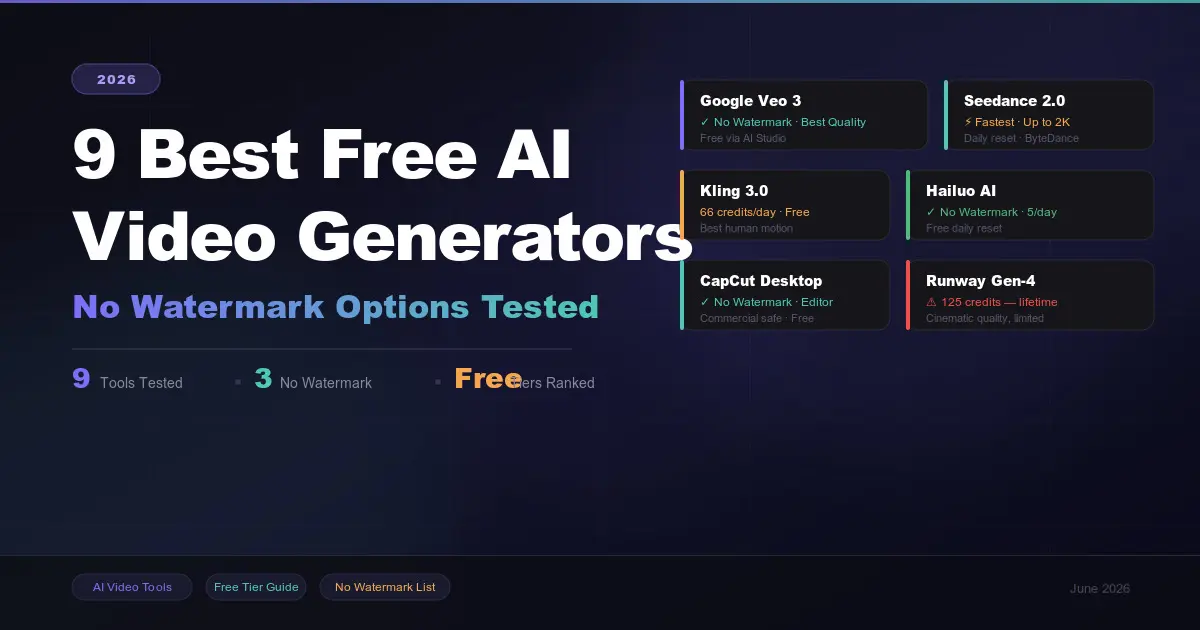
9 Best Free AI Video Generators in 2026 (No Watermark Options Tested)
 in 2026.png)
Build Your First AI Agent in 2026 (Step-by-Step Beginner Guide)
, Gemini, and Claude (2026 Deep Dive).png)
How ChatGPT, Gemini & Claude Actually Work (Simple Explanation 2026)
.png)