Home › AI › How ChatGPT, Gemini & Claude Actually Work (Simple Explanation 2026)
How ChatGPT, Gemini & Claude Actually Work (Simple Explanation 2026)
It’s 2026, and we are long past the era where simply knowing "how to use a prompt" is enough. If you are serious about integrating AI into your developer workflow, your research, or your business automation, you need to understand why the models behave differently.
We often treat ChatGPT, Gemini, and Claude as interchangeable assistants. They are not. They are built on fundamentally different structural philosophies, and choosing the wrong one for your complex task doesn't just waste time; it produces inferior results.
This post is for comparisons between major platforms or technical differences, such as "LLM architectures," "Context Window differences," or "AI model latency."
Recommended for you
ChatGPT vs Gemini vs Claude - Which One Wins?
Why I Started Solvex Technologies After 9 Years in Software Development
In this technical deep dive, we are opening up the hood to examine the specialized architectures that define the "Big Three."
1. OpenAI’s GPT-4 Family: The Modular Specialist
OpenAI's approach has matured into a sophisticated modular ecosystem rather than a monolithic model.
The Technical Edge: Mixture-of-Experts (MoE)
While OpenAI is secretive about exact parameters, GPT-4 is widely understood to utilize a Mixture-of-Experts (MoE) architecture. Instead of one massive neural network processing every single token you input, GPT-4 has multiple smaller, specialized "expert" networks.
When you submit a prompt, a "router" network quickly analyzes the query and determines which specific experts are best suited for the task (e.g., one expert for coding, another for creative writing). Only those relevant experts are activated.
Why it matters to you:
This allows for massive scale and extreme nuance without the inference latency of a single gargantuan model. It is why GPT-4 remains highly versatile and particularly adept at complex reasoning and code generation.
2. Google's Gemini: The Native Multimodal Native
Gemini was the first foundational model series built from the ground up to be "natively multimodal." It didn't just learn text and then learn how to describe images later; it was trained simultaneously across audio, video, images, and code.
The Technical Edge: Efficient Cross-Modal Attention
Other models achieve multimodality by stitching separate encoders (like a vision encoder and a text encoder) together. Gemini’s core cross-modal attention mechanisms allow the model to reason seamlessly across these formats.
When you feed Gemini a video and ask it to write a script based on a specific timestamp, it doesn't translate the video into text first. It directly processes the video and audio features with your text input in a unified tensor space.
Why it matters to you:
Gemini excels at tasks involving media. Its 2026 iteration, including the 1.5 Pro model, offers staggering 1-million-plus-token context windows, allowing it to digest hours of video or entire codebases in a single session.
3. Anthropic's Claude: The Long-Context Reasoner
Anthropic has distinguished Claude by prioritizing two critical areas: "Constitutional AI" (safety) and immense context capability.
The Technical Edge: Linear-Scale Attention & Optimized Context
Where other models hit a wall when context windows get too large, Claude uses specialized attention mechanisms—sometimes referred to as "linear attention" variants—that reduce the computational cost of looking at long documents. A traditional model’s memory demands scale quadratic-ly with input length ($N^2$); modern long-context models aim for linear ($N$) or near-linear scale.
Claude 3.5 Sonnet (the 2026 benchmark) is designed to retain extreme accuracy (perfect "needle in a haystack" retrieval) over its entire 200,000+ token context. It specializes in "system prompt adherence"—following complex instructions perfectly.
Why it matters to you:
If you need to analyze a 500-page legal document, a complex pharmaceutical research paper, or a massive financial report without the model forgetting details from page 5 by the time it reaches page 499, Claude is the architectural specialist for that task.
Frequently Asked Questions
1. Which model architecture has the fastest inference time?
This varies by task complexity, but generally, models using efficient Mixture-of-Experts (MoE) (like GPT-4) or streamlined architecture (like Claude 3.5 Sonnet) offer the best balance of speed and complex reasoning. Smaller models like Gemini Flash are designed specifically for latency-sensitive tasks.
2. What is a 'context window,' and why are they so different in 2026?
A: A context window is the amount of active information (tokens/data) the model can hold in its "working memory" simultaneously. Architectures have evolved dramatically, using techniques like linear attention, to allow Gemini (1M+ tokens) and Claude (200k+ tokens) to process entire data sets at once.
3. Is "natively multimodal" truly superior?
A: Yes, for cross-modal reasoning. Native multimodality means the model understands relationships between image features, audio frequencies, and text tokens simultaneously, which prevents information loss that occurs during translation or stitching.
Final Thoughts: Choosing Your 2026 Stack
The days of assuming "all AI is the same" are over. When building complex systems in 2026, you must select your model based on its foundational strengths:
For pure reasoning and complex code generation: The modular GPT-4 family is often preferred.
For media integration, massive video analysis, and ecosystem access: The natively multimodal Gemini (specifically 1.5 Pro) wins.
For digesting immense technical documentation and system-prompt precision: Claude 3.5 Sonnet's long-context architecture is the tool.
You aren't just prompting anymore; you are engineering systems. Make sure you are using the right engine.
Need to review the models?
Check our latest performance comparison showdown.
See how we use these architectural differences to make money with AI without skills.

Continue Reading
Recommended Articles
 – 2026 Guide.png)
.png)
Recent Posts

A2E AI Review 2026: This AI Video Generator Gives Free Credits Every Day

Why I Started Solvex Technologies After 9 Years in Software Development
Best Free AI Video Generators (2026) - The Honest Guide
Best Free AI Video Generators in 2026 (No Watermark Text-to-Video Tools Reviewed)
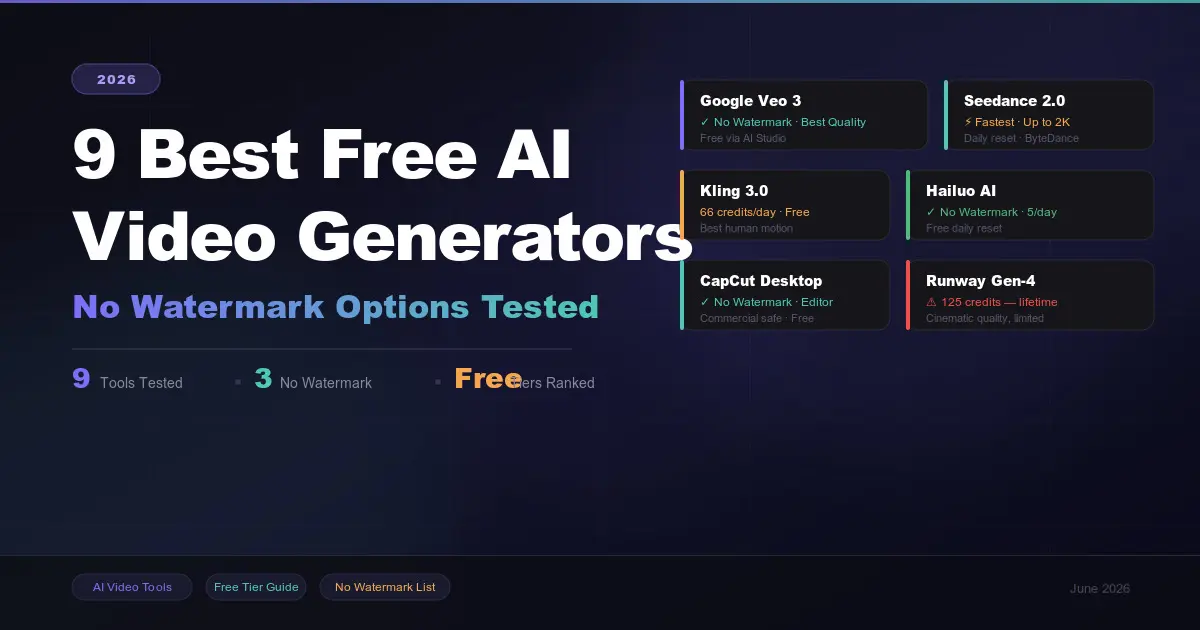
9 Best Free AI Video Generators in 2026 (No Watermark Options Tested)
 in 2026.png)
Build Your First AI Agent in 2026 (Step-by-Step Beginner Guide)
, Gemini, and Claude (2026 Deep Dive).png)
How ChatGPT, Gemini & Claude Actually Work (Simple Explanation 2026)
.png)